
FOSDEM has a particular rhythm. You feel it before the first talk starts. Corridors fill up early, laptops are already open, and conversations resume as if they had only paused a few weeks ago. But this year felt different. The campus was more crowded. The conversations lasted longer. Hallways were packed with people debating architectures, governance, funding, and responsibility. Not in abstract terms, but grounded in concrete choices teams are making right now.
On 31st January and 1st February, the open-source community gathered once again at the ULB campus in Brussels for FOSDEM. For XWiki, this edition confirmed a trend we have been observing for some time: open source is gaining visibility, interest, and momentum. Furthermore, the questions people ask are becoming more structural, more political in the best sense of the word, and more concrete.
This year, we focused our time and energy on the Collaboration and content management devroom and on the community moments around it.
A Collaboration and content management devroom rooted in real concerns
This year’s devroom reflected what we felt across the entire campus: collaboration software is no longer discussed in isolation. Privacy, interoperability, sustainability, accessibility, and digital sovereignty are increasingly interconnected. The sessions moved from concrete product updates to structural ecosystem questions, without losing technical depth.
Below is a quick overview of the talks presented during the day.
CryptPad updates: latest in private real-time collaboration
Presented by Ludovic Dubost, this talk covered recent evolutions in CryptPad, with a focus on improving real-time collaboration while keeping strong privacy guarantees. The session showed how end-to-end encryption and usability continue to evolve together, without compromising CryptPad’s core principles.
Politics in collaboration? I don’t care, give me features!
Jos Poortvliet addressed a familiar frustration in open-source debates. Rather than opposing values and features, the talk argued that good products often emerge precisely because of strong principles, not despite them.
Cloudillo — Beyond self-hosting: building a new generation of collaborative applications
Szilárd Hajba introduced Cloudillo and explored what comes after traditional self-hosting. The talk looked at new architectural approaches for collaborative applications that aim to balance control, scalability, and developer flexibility.
Taiga, Tenzu and the small story of sustainability in open source
Julie Rymer shared a grounded perspective on sustainability, based on the real experience of maintaining and evolving open-source tools. The session focused on trade-offs, constraints, and what “sustainable” actually means for small teams over time.
OpenProject: a year full of updates
Wieland Lindenthal presented a structured overview of OpenProject’s latest developments. The talk highlighted incremental improvements, new features, and how user feedback continues to shape the roadmap.
100-Day-Challenges: advancing European sovereign IT together
Alexander Smolianitski introduced the concept of short, focused challenges aimed at advancing European digital sovereignty. The session showed how coordinated efforts can lead to concrete progress across organizations and projects.
How the public sector can sustainably work with open source communities
Returning to the devroom, Jos Poortvliet focused on public-sector engagement. The talk addressed long-term collaboration models, procurement realities, and the importance of treating open source as a partnership rather than a transaction.
What’s new in BlockNote? (The block-based, Notion-style editor)
Yousef El-Dardiry and Nick Perez presented updates to BlockNote, a modern block-based editor. The session covered recent improvements and how the project positions itself in an ecosystem dominated by proprietary tools.
Let’s put Cristal everywhere – how to embed wikis in heterogeneous web platforms
Manuel Leduc demonstrated how Cristal can be embedded across different platforms. The talk focused on modularity, reuse, and making structured knowledge accessible beyond a single application.
Document interoperability and conversion: it shouldn’t be that hard!
Stephan Meijer and Albert Krewinkel tackled a long-standing pain point in collaboration software. Their session explored why document conversion remains difficult, and what better tooling and standards could realistically improve.
Collabora Office – off & on collaboration
Michael Meeks presented recent developments in Collabora Office, focusing on both offline and online collaboration scenarios and how they can coexist in real deployments.
Collaborative slideshow with Collabora Online
Pranam Lashkari showcased collaborative slideshow editing with Collabora Online, demonstrating how real-time collaboration extends beyond text documents into presentation workflows.
We need to support authors better to deliver accessible content
Mike Gifford focused on accessibility from the author’s perspective. The talk highlighted how tools can either help or hinder accessible content creation, and why accessibility needs to be built into authoring workflows from the start.
Integrating open source telephony into a digital workplace
Jehan Monnier and Alexandre Jörgensen presented how open-source telephony can be integrated into broader digital workplace environments, connecting communication tools with collaboration platforms.
Stronger interoperability through HTML and better tooling
Dennis Snell explored how HTML and improved tooling can serve as a more reliable foundation for interoperability between collaboration tools, reducing friction and lock-in.
POSSE content with Drupal using Nostr
Sebastian Hagens demonstrated how Drupal can publish content across decentralized networks using Nostr, illustrating practical approaches to content distribution beyond centralized platforms.
Building a student wiki at MFF Charles University
Jan Černý and David Koňařík shared a concrete academic use case, showing how students built and maintained a wiki as part of their university environment, including lessons learned along the way.
Building a TODO app on top of Forgejo
Closing the day, Jos van den Oever walked through the creation of a simple application on top of Forgejo, highlighting how open platforms enable experimentation and learning with minimal overhead.
XWiki & friends meetup: where the real conversations happen
Saturday evening is when FOSDEM usually exhales. This year, it felt more like a second peak.
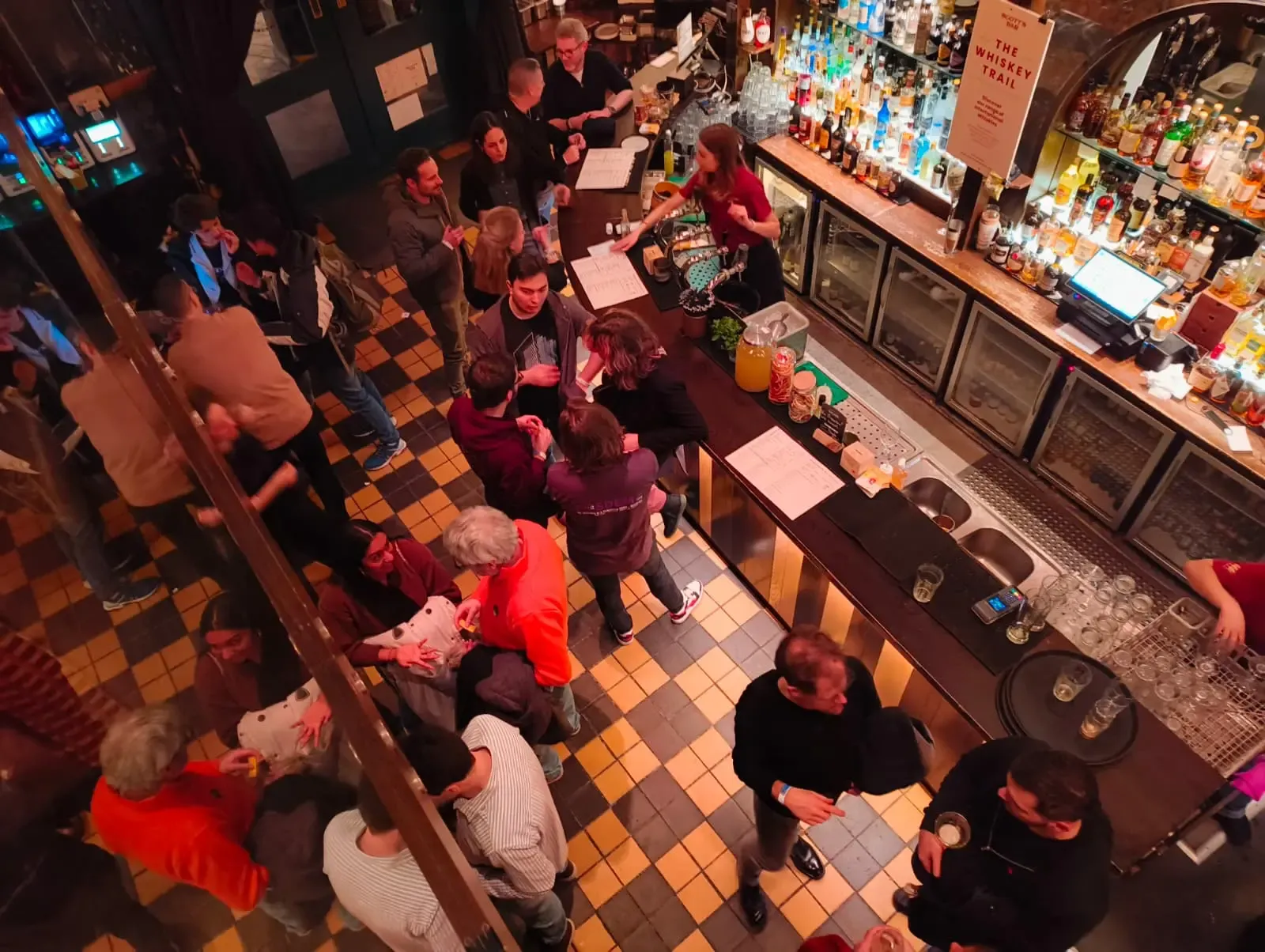
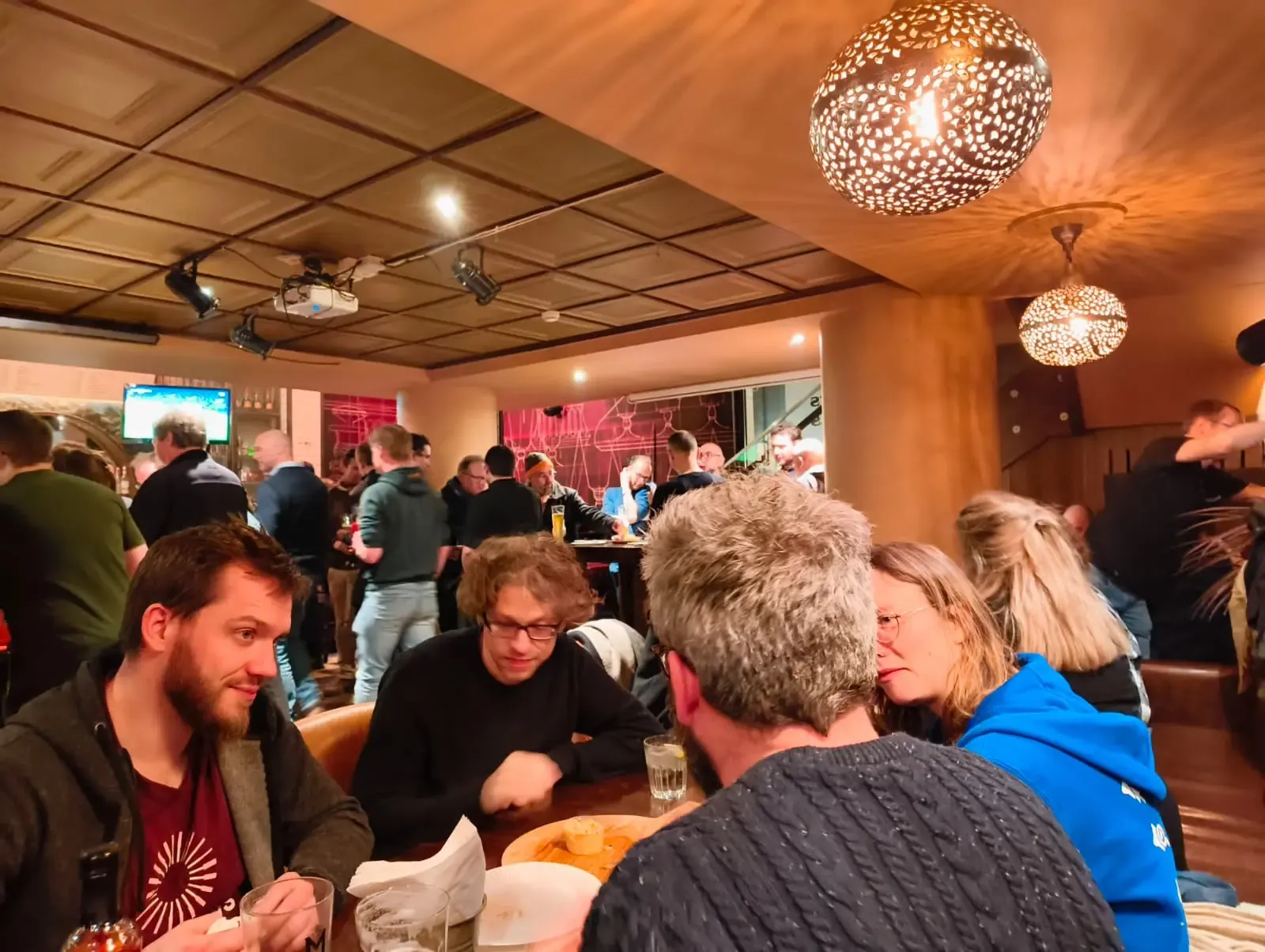
Together with our partners from Nextcloud, OpenProject, and Passbolt, we hosted our largest meetup to date at Scott’s Bar in Brussels. More than 200 people showed up, and the space filled quickly. Contributors, maintainers, users, partners, and people discovering these projects for the first time all mixed in the same room.
What made the evening stand out was not the size alone, but the tone. There was no program and nothing to “attend.” Conversations formed naturally, often picking up exactly where they had stopped earlier that day in a devroom, a corridor, or over coffee. People compared real setups. They talked openly about migrations that went well and those that did not. They shared funding concerns and questioned assumptions about scale, governance, and long-term ownership.
These were not pitch conversations. They were working conversations. The kind that only happen when people feel comfortable enough to be honest about constraints, trade-offs, and mistakes. The kind that remind you that open source is not just code and licenses, but relationships built over time.
This meetup has quietly become a cornerstone of our FOSDEM presence. It reflects the same shift we felt across the whole weekend: more people, more engagement, and a stronger collective confidence in open source as serious infrastructure.
Take a look at some of the best moments from the meetup!

What this year made clear
FOSDEM 2026 felt like a consolidation. The focus on digital sovereignty was stronger. The questions were sharper. The community was larger and more engaged. All signs point in the same direction: open source is becoming a default choice for organizations that want control, longevity, and clarity.
For XWiki and CryptPad, this is familiar territory. FOSDEM remains the place where these ideas are not just talked about, but tested against reality, challenged by peers, and strengthened by the community.
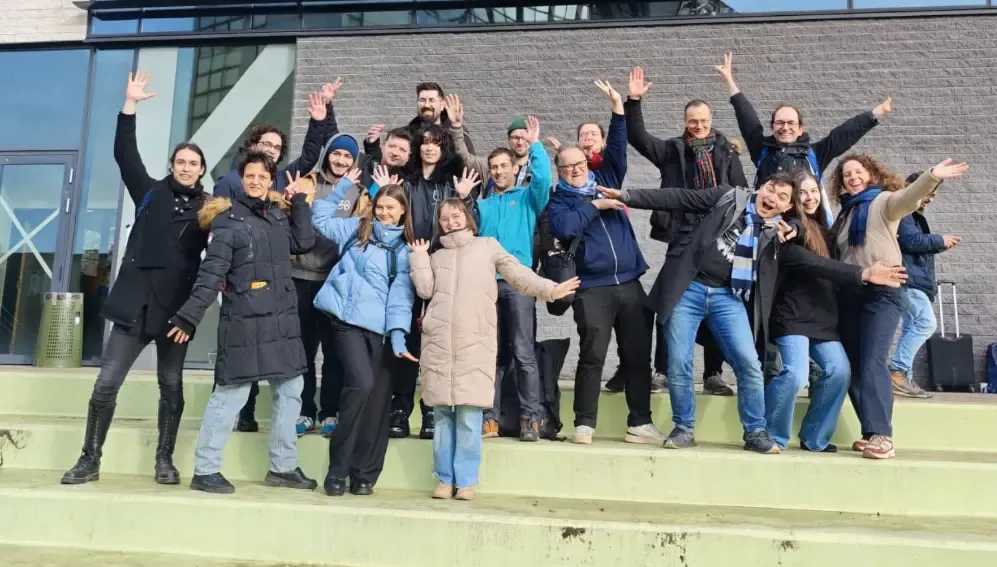
We are already looking ahead to the next edition. Until then, let's not forget about the traditional XWiki at FOSDEM photo.