
From September through December, we joined (and hosted) events across Europe where digital sovereignty was no longer a policy concept, but a practical concern. Across public administrations, security-focused discussions, and open-source communities, organizations were asking us the same questions: how to regain control over their collaboration tools, their data, and their long-term knowledge.
We started the season by hosting a webinar with Nextcloud. We showed how to move away from Confluence using a complete open-source migration stack. We then brought the same conversations to public events and meetups across Europe. We closed the year in Paris at Open Source Experience. There, open source was treated as a strategic foundation, not a fallback.
Here’s a look back at where we’ve been and what stood out along the way.
*
💻 Webinar: Break free from Confluence
We started the season with a joint webinar with Nextcloud. The goal was simple: show what a complete open-source migration stack looks like in practice, using XWiki and Nextcloud.
We covered why teams are now actively planning their next steps, given Atlassian’s Data Center timeline. Then we walked through migration strategy and a live demo of the Confluence Migration Toolkit. The focus wasn’t just “moving pages.” It was keeping what makes a wiki usable: structure, permissions, macros, attachments, and validation after import.
The Q\&A made it clear what people need next: realistic answers for large instances, integration (LDAP/SCIM), export performance, and how to plan migrations that teams can review and trust.
*
🇩🇪 Smart Country Convention (SCCON)
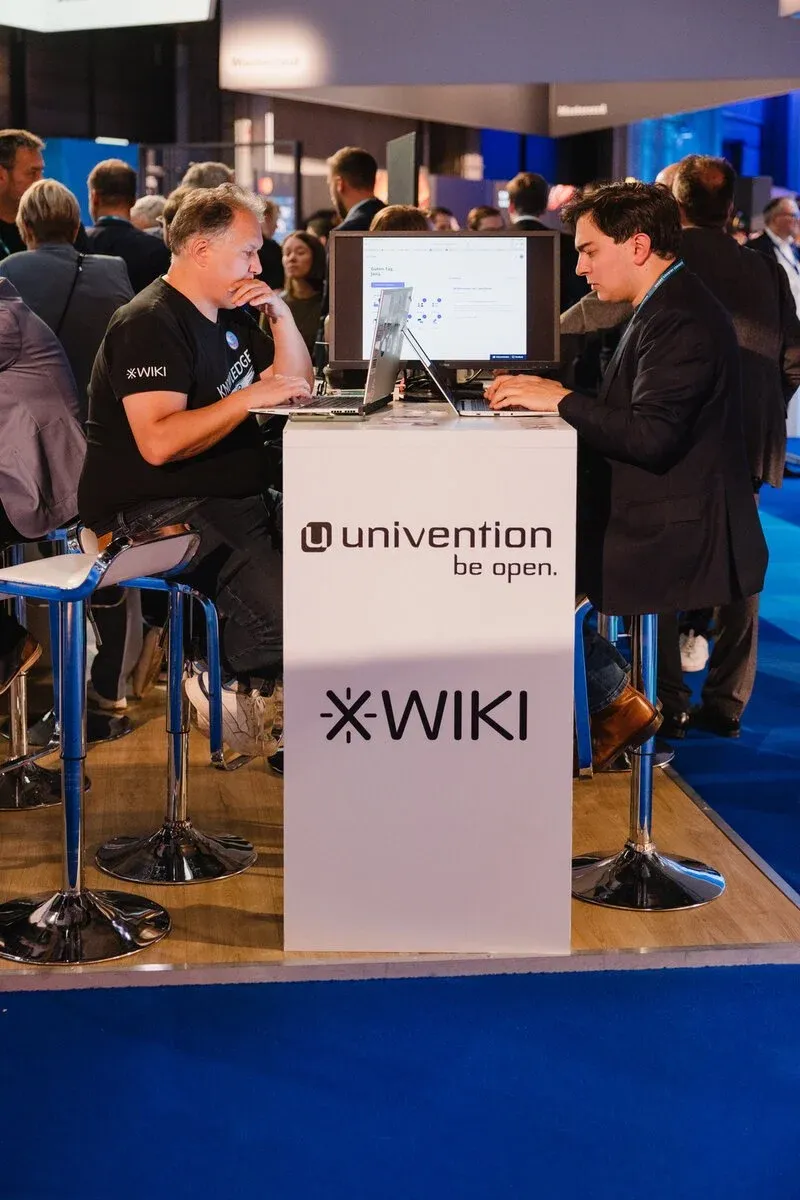
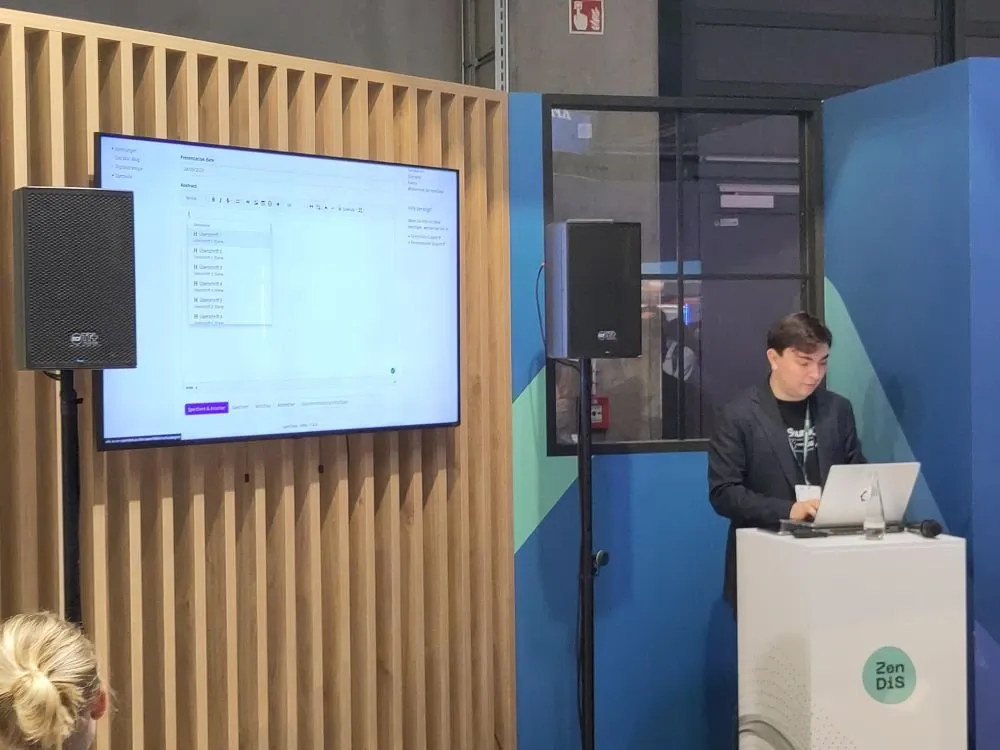
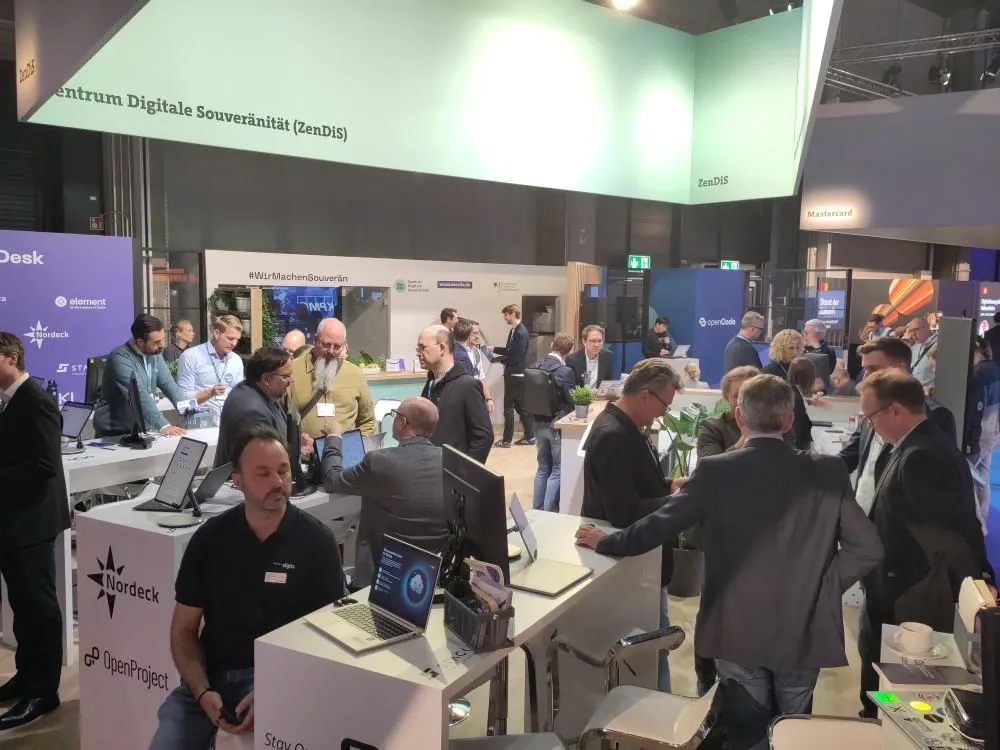
We returned to Berlin for Smart Country Convention to talk about digitally sovereign collaboration tools for public administrations. At the ZenDiS booth, together with our partners from the openDesk ecosystem, we had a steady flow of visitors and many in-depth discussions with stakeholders from politics, administration, the public sector, and the press.
A big part of those discussions was openDesk itself. One year after its official launch at SCCON 2024, we could share concrete feedback from the field and real success stories from organizations already using and testing the stack. That changed the tone. The question was no longer "Could this work?" but "How do we adopt it well?"
Clément Aubin, our Director of Sales, and Ludovic Dubost, our CEO, showed how XWiki and CryptPad fit into openDesk and what we’ve learned so far. For many visitors, it was reassuring to talk with the teams behind the stack and see a sovereign approach that is already running in practice, not just on slides.
*
🇫🇷 Hexagone Tour
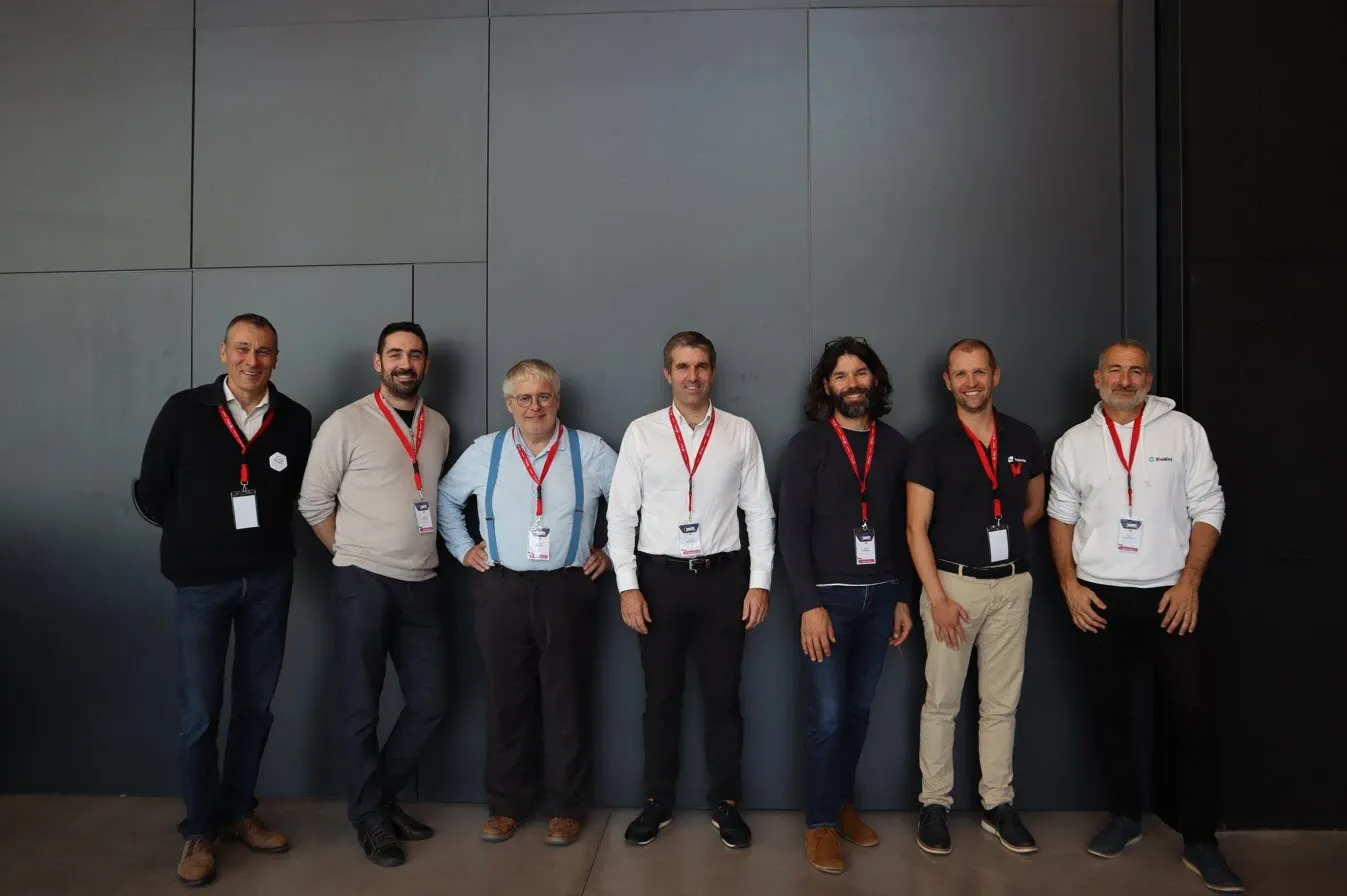
In October, we joined the Hexagone Tour in Toulouse, part of the Hexagone suite project led by Interstis and funded through France 2030. XWiki is one of the building blocks of this initiative, alongside partners such as Linphone, BlueMind, Parsec, Tranquil IT, and 3DS Outscale, working toward a sovereign, 100% French collaboration suite.
Hosted by the local French Tech organization, the event brought together regional governments, communities, and businesses. The discussions were concrete: cybersecurity requirements, operational constraints, and what it takes to move from pilots to real deployments.
Cédric Lamblin, our Account Manager, represented XWiki at the event. He shared how XWiki supports teams that need a knowledge and collaboration platform they can run, govern, and adapt locally as part of a broader sovereign stack.
*
🇩🇪 it-sa Expo & Congress
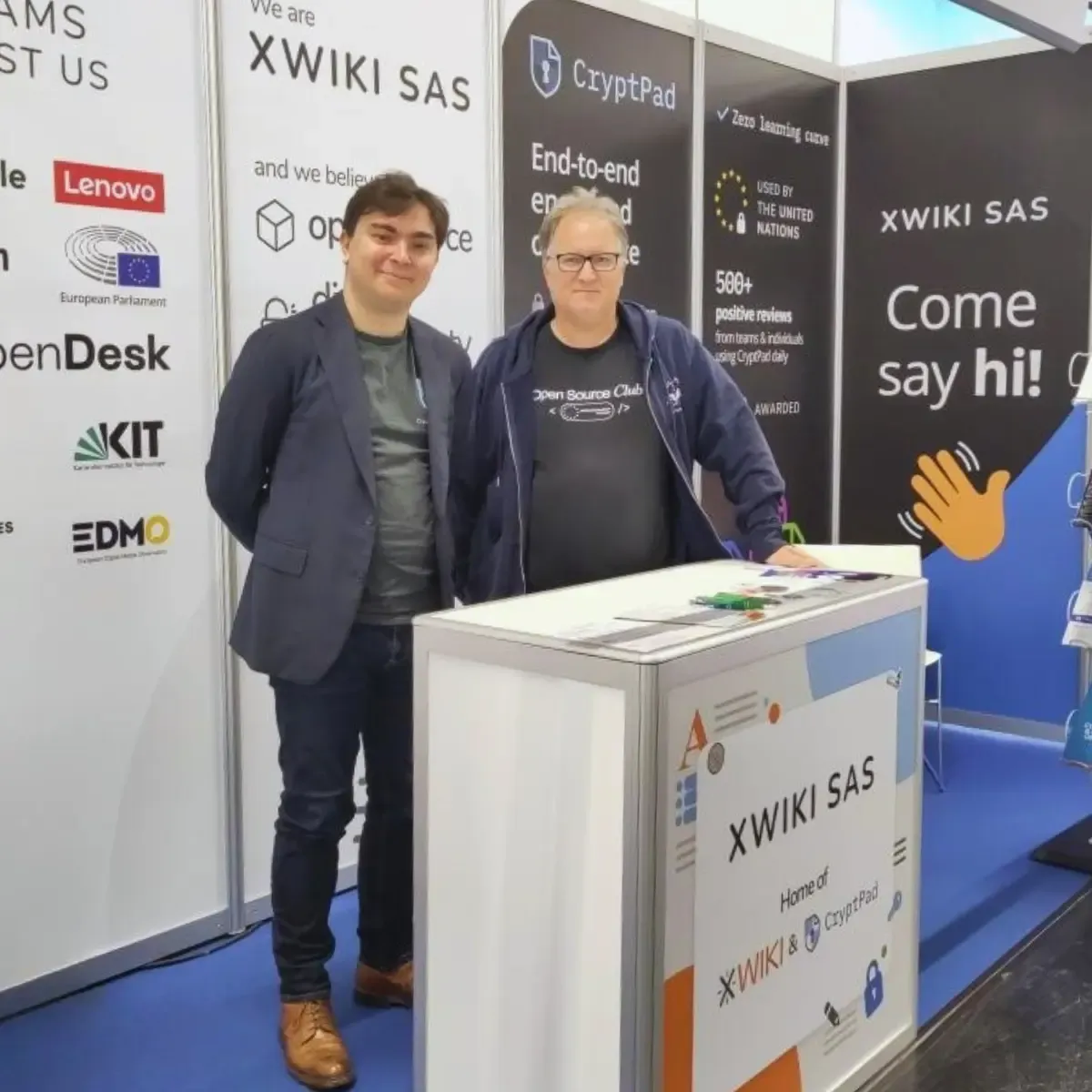
We returned for a second year in a row at it-sa Expo & Congress in Nuremberg, one of Europe’s main meeting points for IT security.
At our stand, Ludovic Dubost and Clément Aubin met with security professionals and public institutions to discuss secure collaboration in environments where trust, control, and auditability are non-negotiable.
Interest was strong around 2 needs we see more and more in regulated contexts. First, a structured knowledge platform that can be self-hosted and inspected, with no hidden dependencies. Second, collaboration that protects sensitive information by design, which is where CryptPad’s end-to-end encryption resonated.
Most discussions quickly moved past feature lists. People wanted to compare deployment options, understand trust boundaries, and talk through real constraints, from compliance requirements to day-to-day operations. Security conversations kept leading to the same point: If you don’t control the stack, you don’t fully control the risk.
*
🇨🇭 Swiss IT Forum(s)
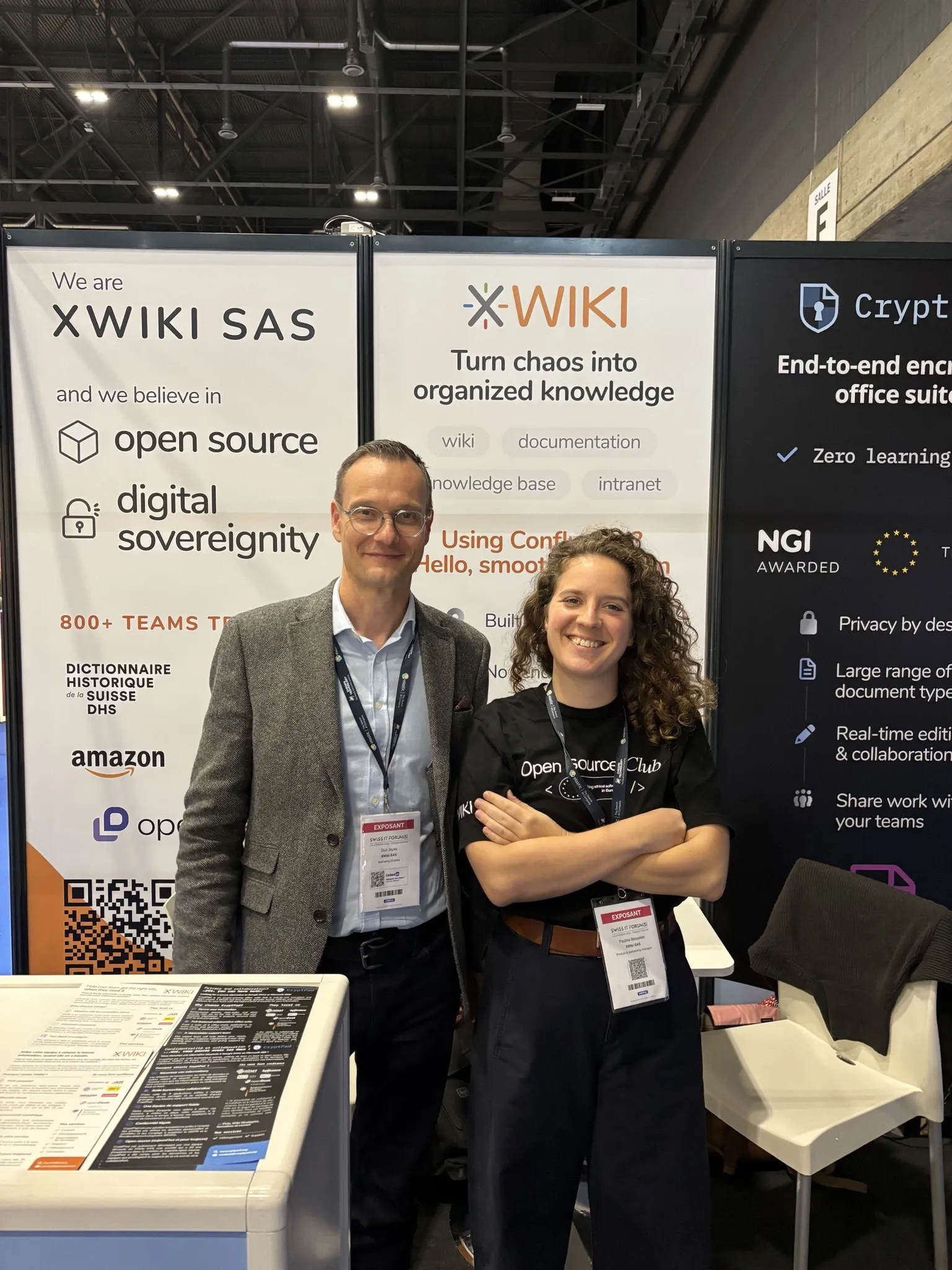
October also marked our first time at Swiss IT Forum(s) in Geneva. The event brought together IT leaders and decision-makers from across Switzerland, and it was a great setting for honest, practical conversations about infrastructure, security, and long-term control.
At the XWiki and CryptPad stand, Dan Jayes, our Marketing Director, and Pauline Bessoles, our Partnerships Manager, spent 2 full days in demos and discussions. What made it valuable was how concrete the conversations were. Visitors came with specific setups, constraints, and timelines. They wanted to see how structured knowledge works in practice, how access rights and governance are handled, and what ownership means once the tool is in production.
The common thread was clear. Visitors were looking for structured knowledge they can actually own, plus collaboration that fits their constraints, not the other way around. We left with a better understanding of what Swiss organizations expect, and a lot of follow-up conversations we’re genuinely excited to continue.
*
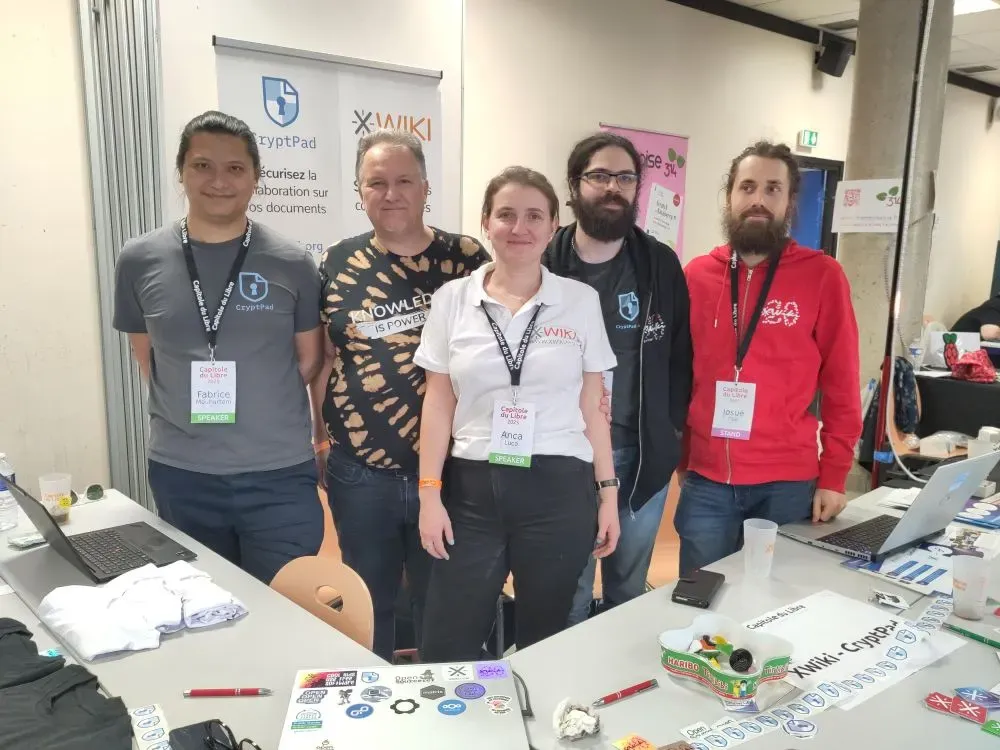
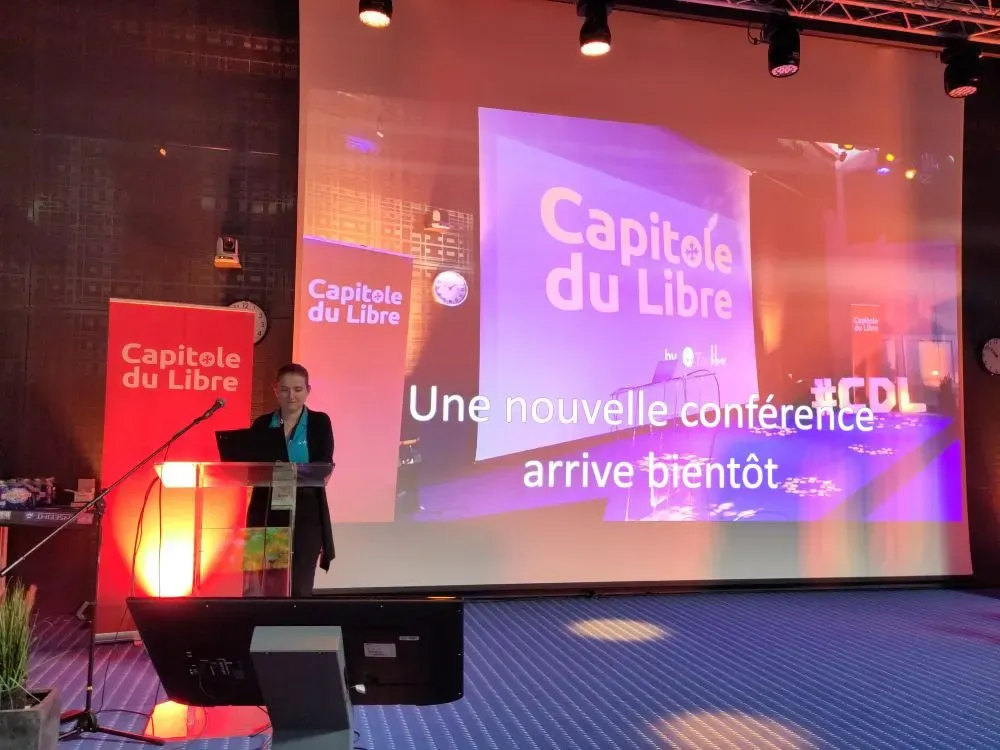
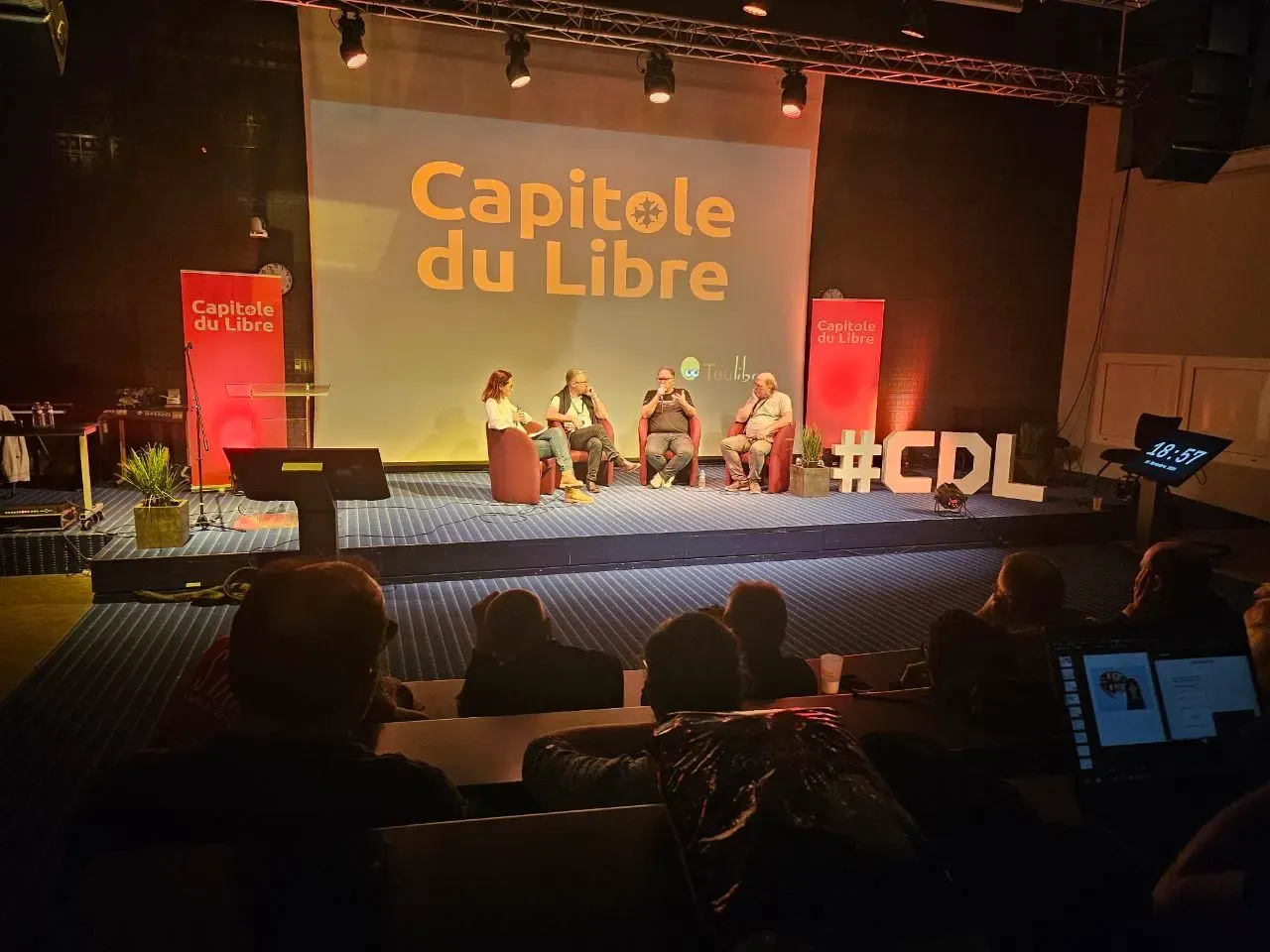
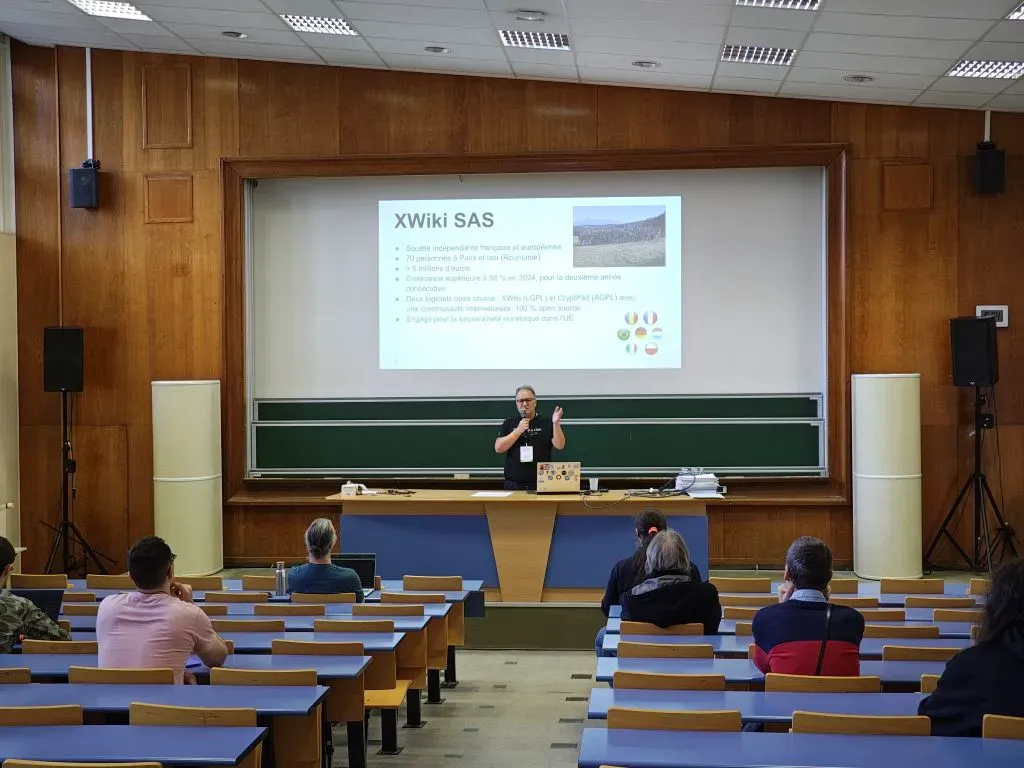
🇫🇷 Capitole du Libre
We returned to Capitole du Libre in Toulouse, a conference that always keeps free software discussions concrete and technical.
Our CEO, Ludovic Dubost, joined a round table on digital sovereignty and why free software is a strategic choice, not a nice-to-have.
In "5 years of Confluence to XWiki migrations: what we’ve learned", Ludovic and Anca Luca, our Client Services CTO, shared lessons from large migration projects, including the University of Lorraine, BMC, and the European Parliament. The focus was on what makes migrations succeed in real organizations: preparation, tooling, and support for end users through change.
Later that day, Ludovic presented "20 years of hacking the funding of XWiki and CryptPad." It was a candid look at the business and funding realities behind sustainable open-source collaboration tools, and why the financial model often matters as much as the code.
CryptPad was also featured in "Security by design through end-to-end encryption", where Fabrice Mouhartem explained how CryptPad is built around cryptography so privacy does not come at the cost of usability.
*
💻 Webinar: Stay in control after Atlassian
On November 19, we hosted a joint webinar with OpenProject: "Stay in control after Atlassian Data Center." The session was hosted by Ștefana Nazare (XWiki) and Robin Wagner (OpenProject).
We focused on 3 concrete things. First, we showed how XWiki and OpenProject cover the core use cases teams typically run on Confluence and Jira. Second, we demoed how the 2 tools connect in practice through the OpenProject Integration (Pro) in XWiki. This keeps knowledge and project tracking linked instead of living in separate silos.
Finally, we walked through what a realistic migration methodology looks like: Understand what you have, decide what to keep, and move step by step with clear validation points. The Q\&A confirmed what we keep hearing this year: Teams don’t just want an alternative. They want a stack they can run, govern, and evolve on their own terms.
*
🇩🇪 European Digital Sovereignty Summit (Berlin)
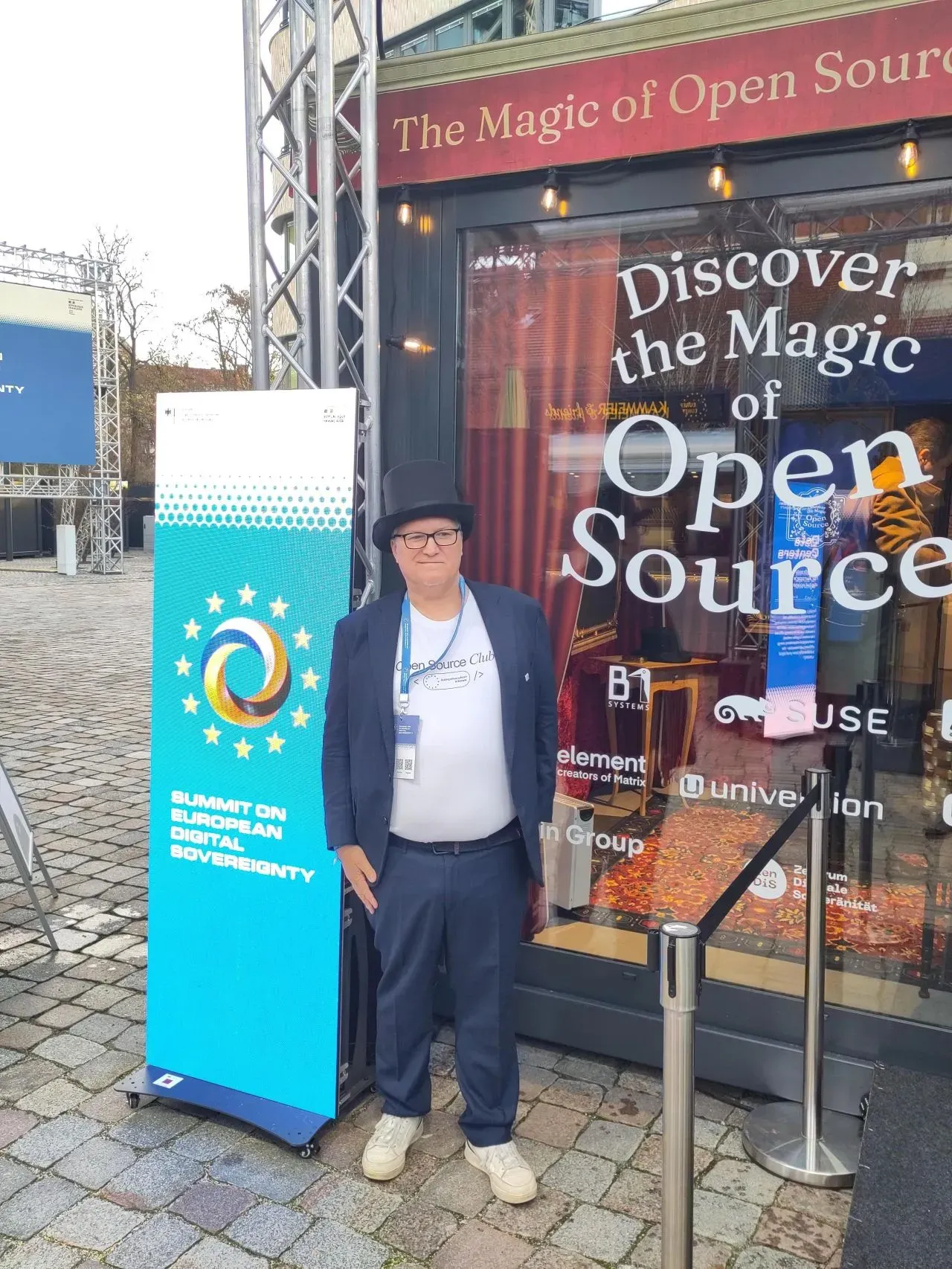
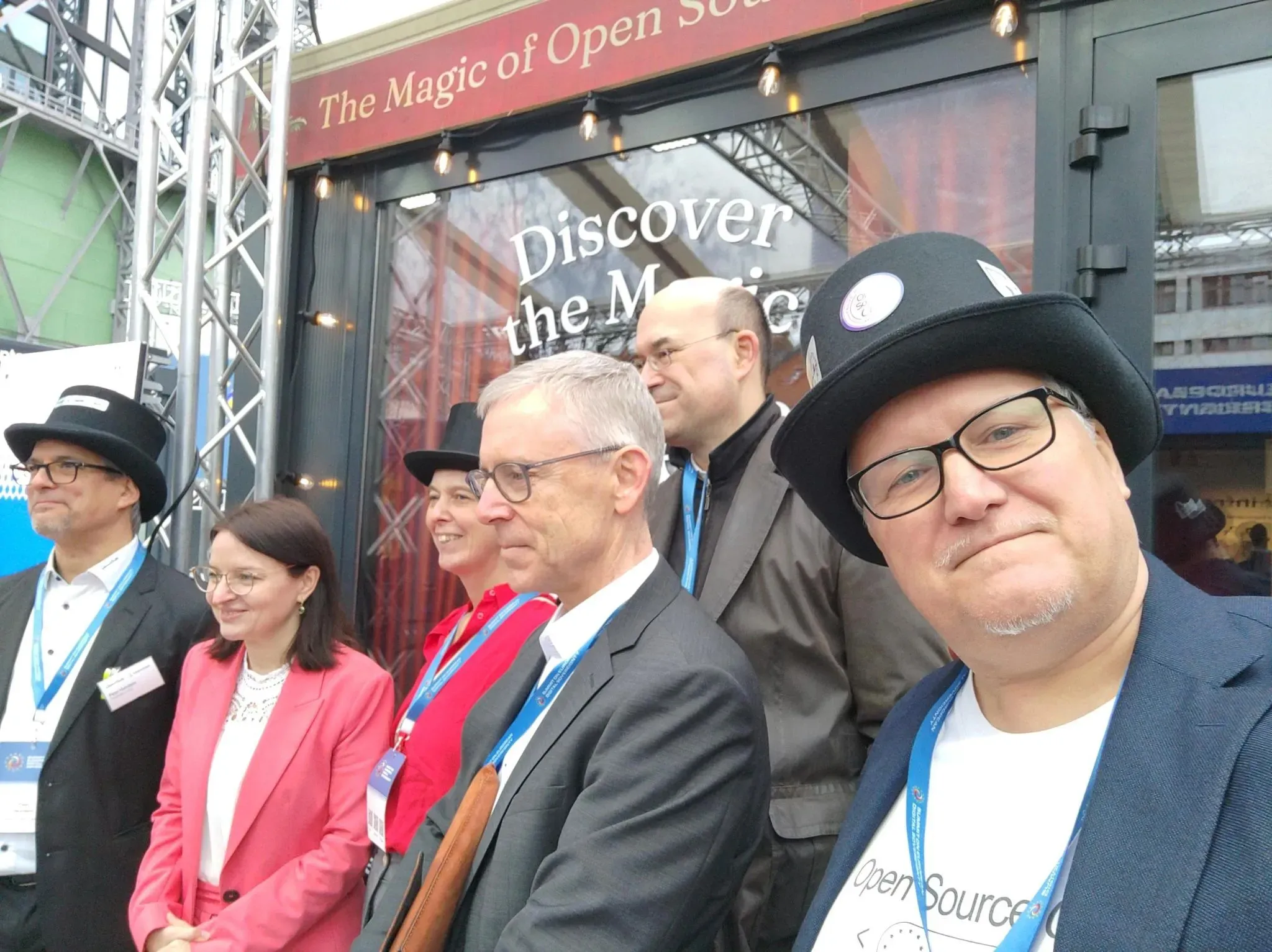
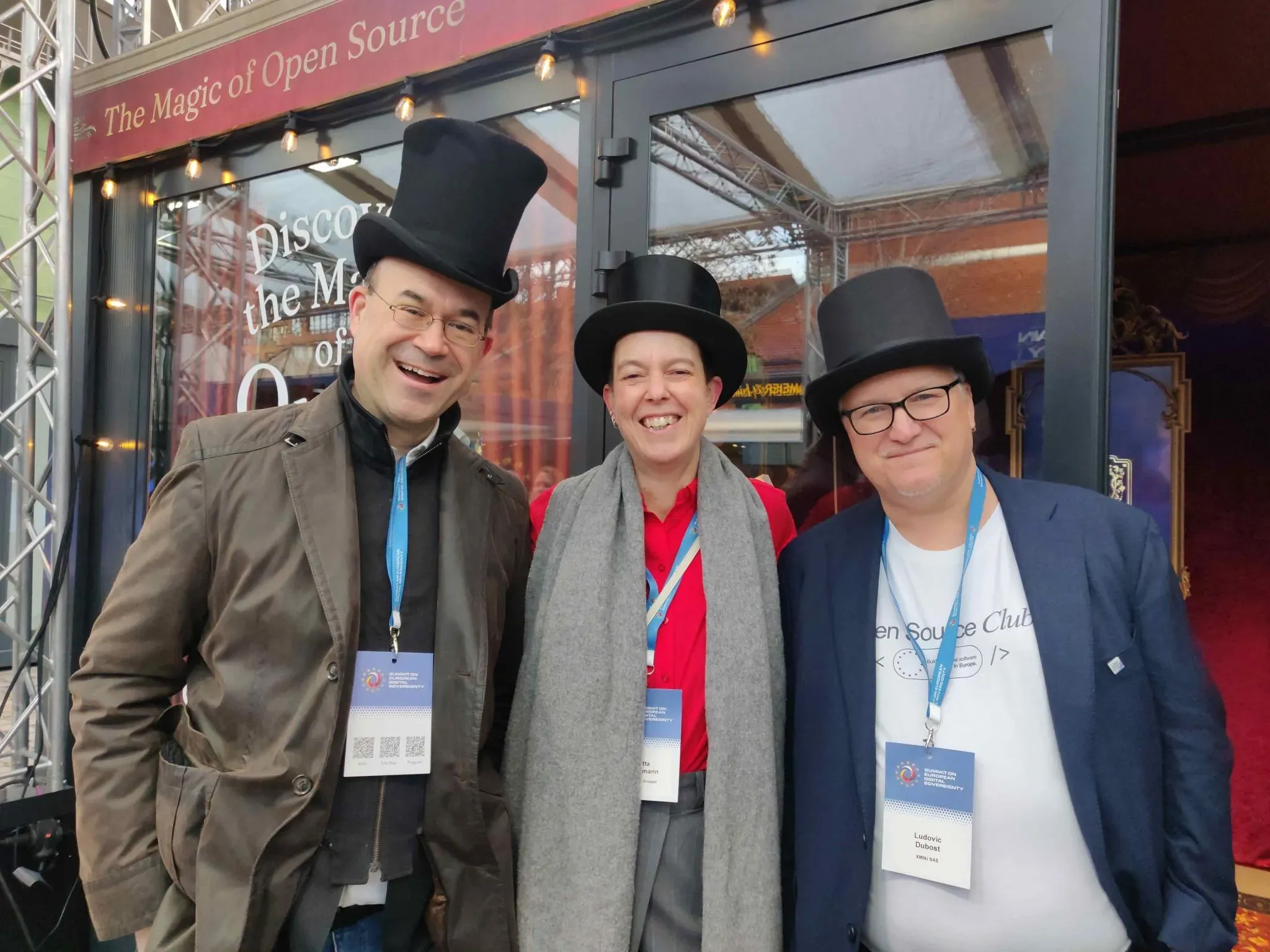
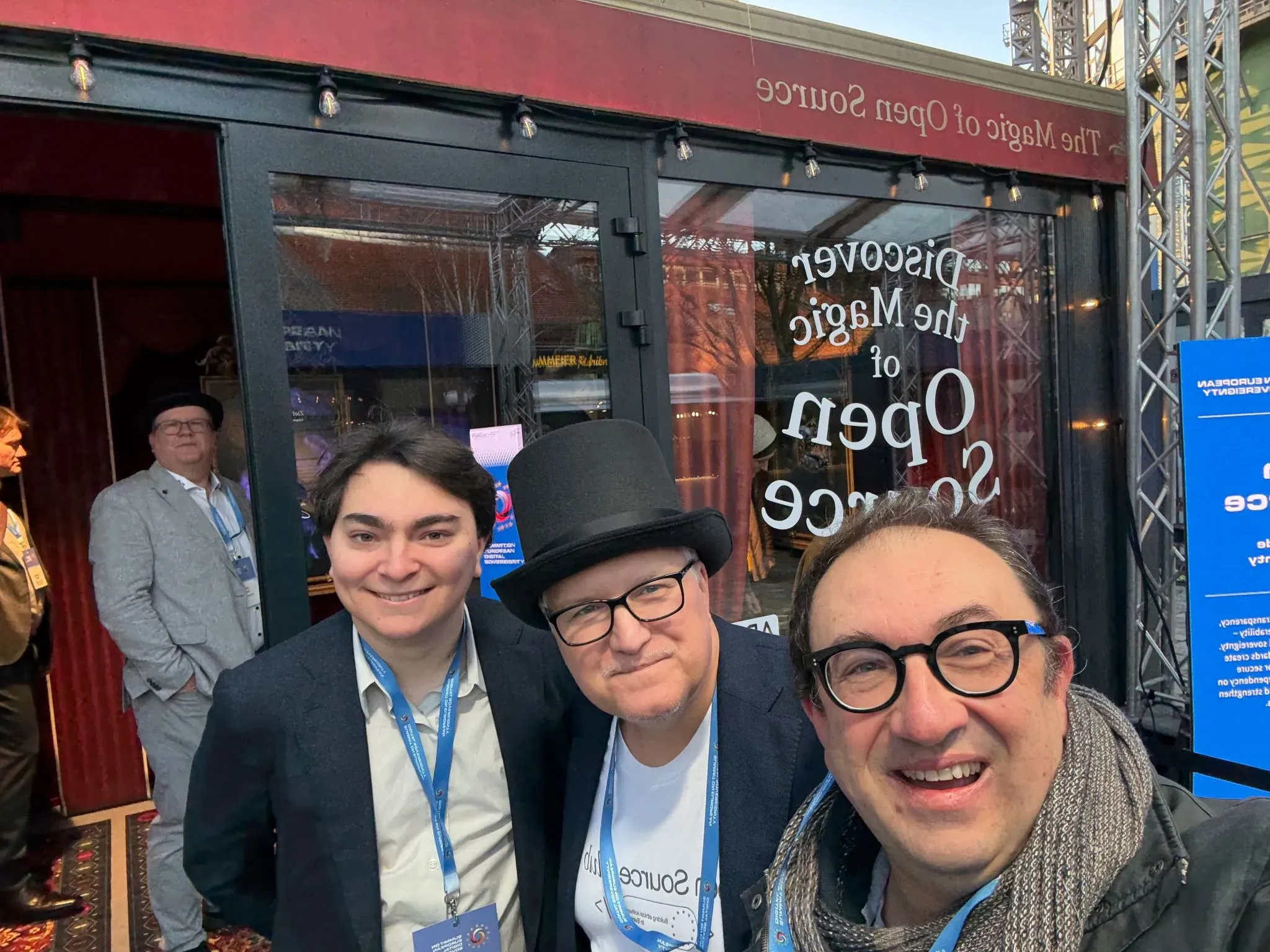
In November, XWiki representatives attended the Franco-German Summit on European Digital Sovereignty in Berlin. The event brought together political leaders, public institutions, and open-source actors around a shared acknowledgment: Europe’s digital dependency is no longer theoretical, and sovereignty has become a strategic urgency.
What made this summit stand out was the tone. Open source was not discussed as a secondary option, but as a central pillar of Europe’s digital strategy. Political leaders openly linked sovereignty to procurement, infrastructure, and long-term control, with clear references to building and buying European technology.
A strong signal came from the "Magic of Open Source" pavilion, hosted by APELL and the Open Source Business Alliance. There, open source was presented as the foundation of sovereign IT, with concrete projects and providers showcased side by side. Seeing initiatives like openDesk highlighted in this context confirmed that European open-source stacks are no longer experiments, but viable infrastructure already running in production.

*
🇫🇷 Nextcloud Enterprise Day (Paris)
We also attended Nextcloud Enterprise Day in Paris, a partner-focused event bringing together organizations already running or evaluating open-source collaboration platforms at scale.
The conversations naturally built on what we’d covered in our joint webinars. For many attendees, it was an opportunity to look beyond individual tools and discuss a complete, open-source collaboration setup that can grow with their needs.
*
🇫🇷 Open Source Experience (OSXP)
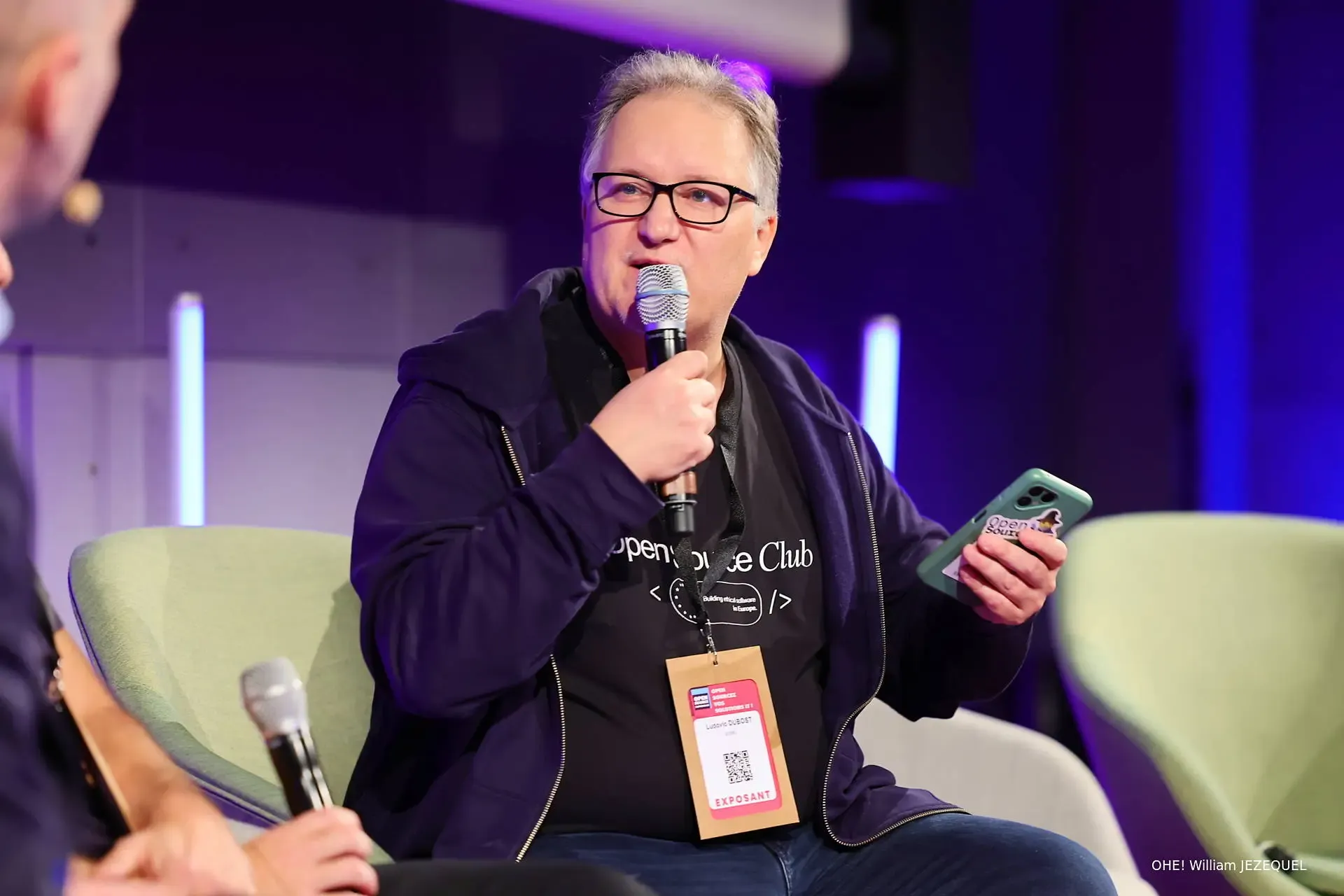
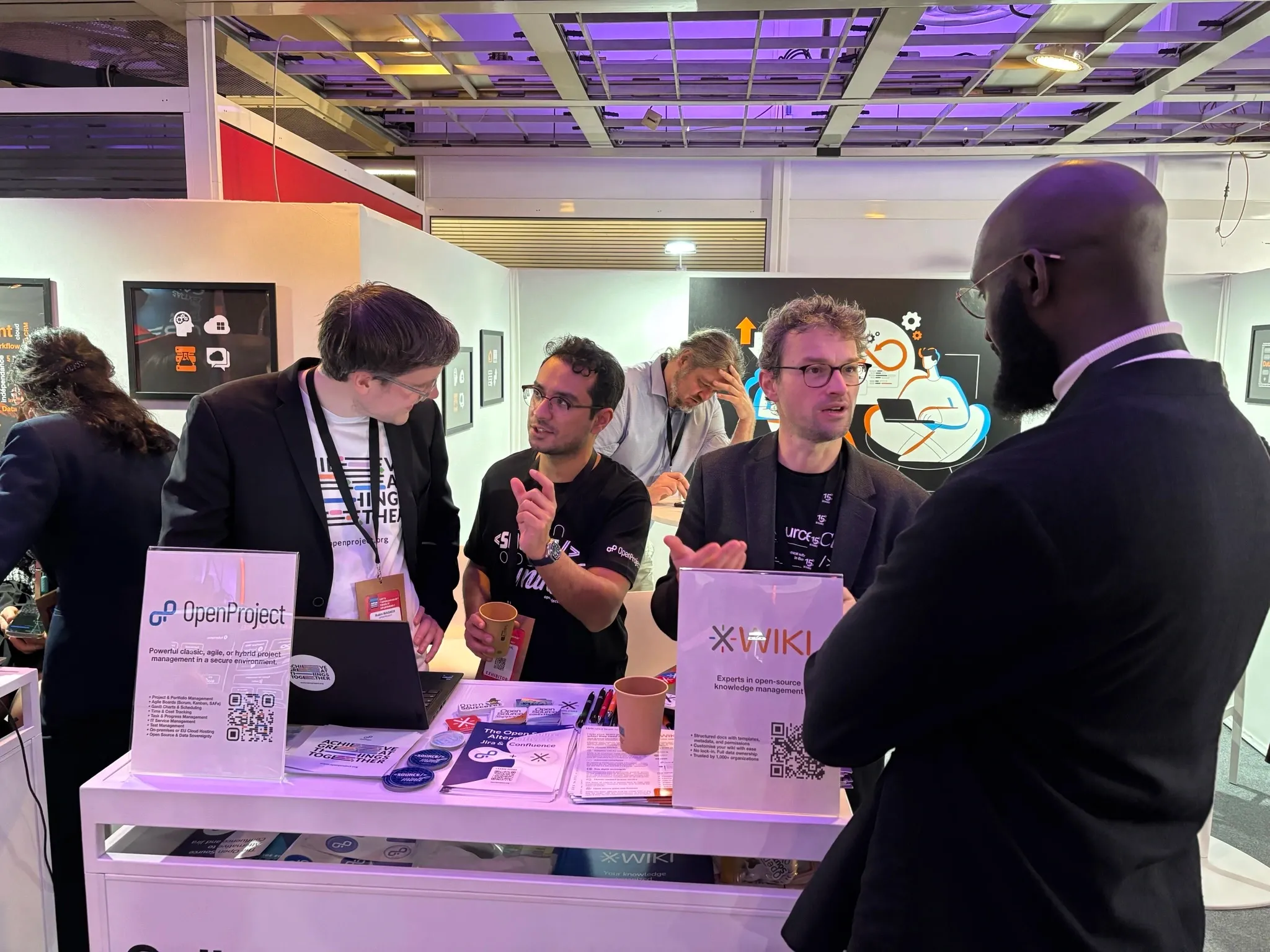
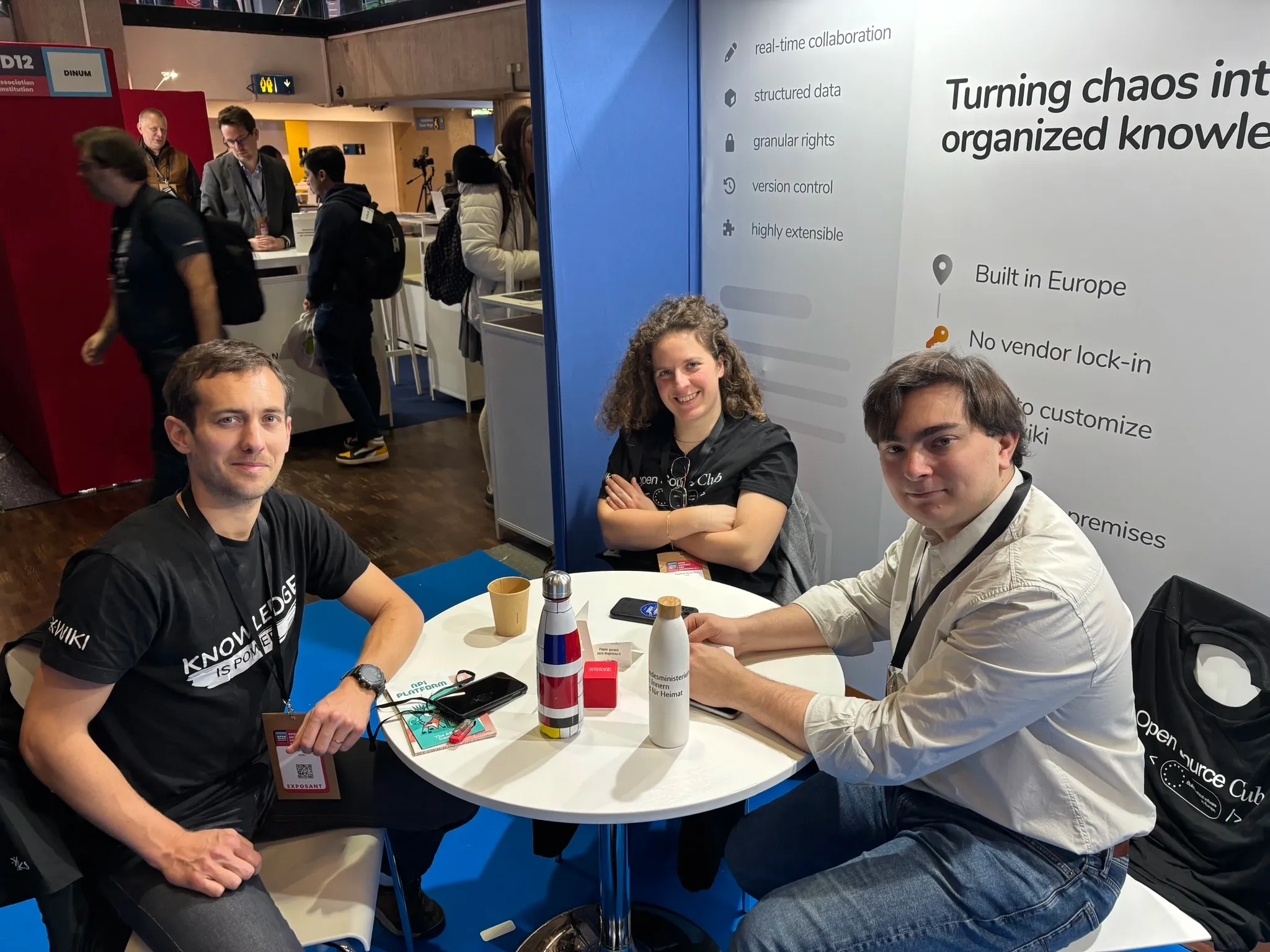
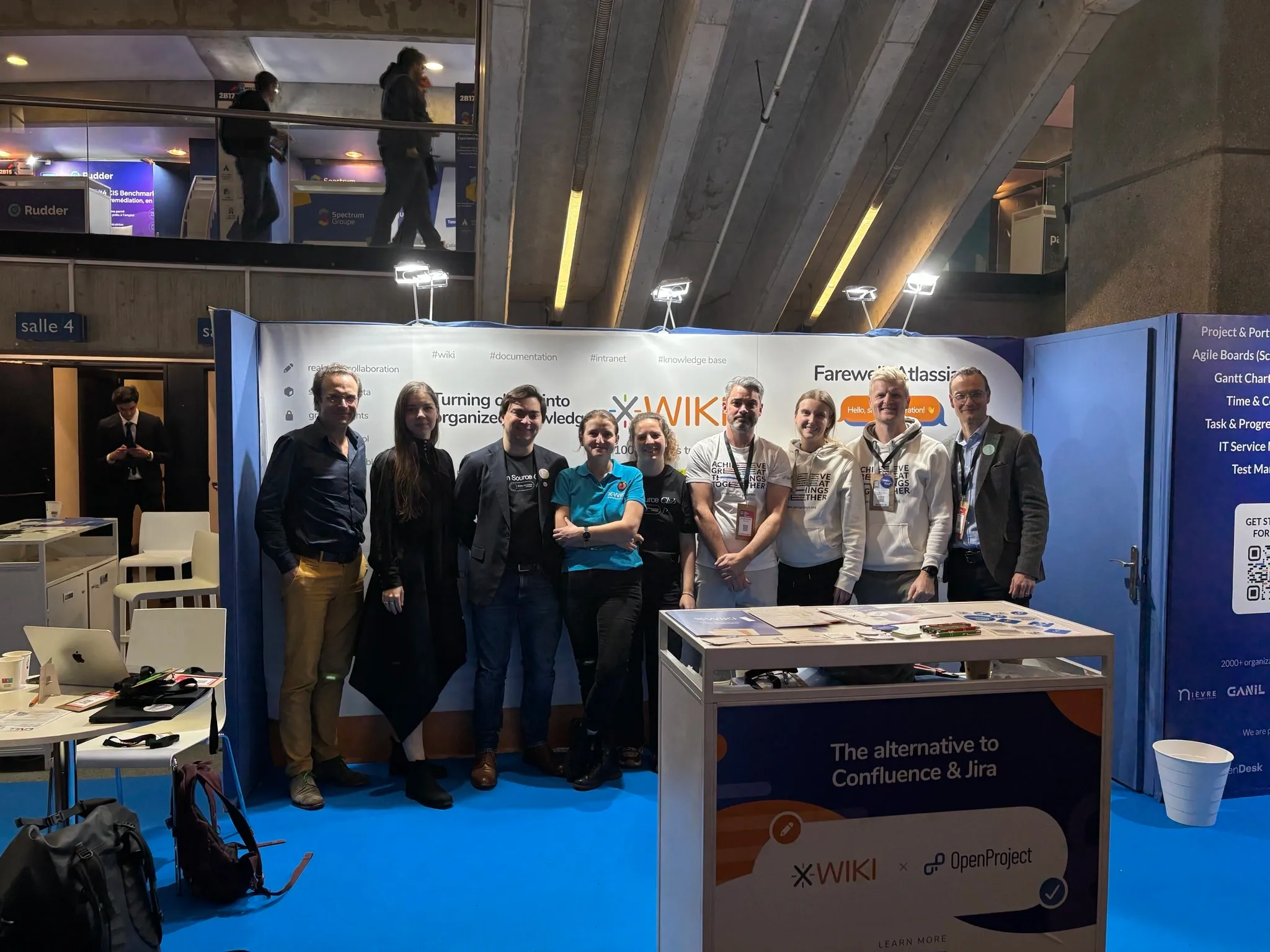
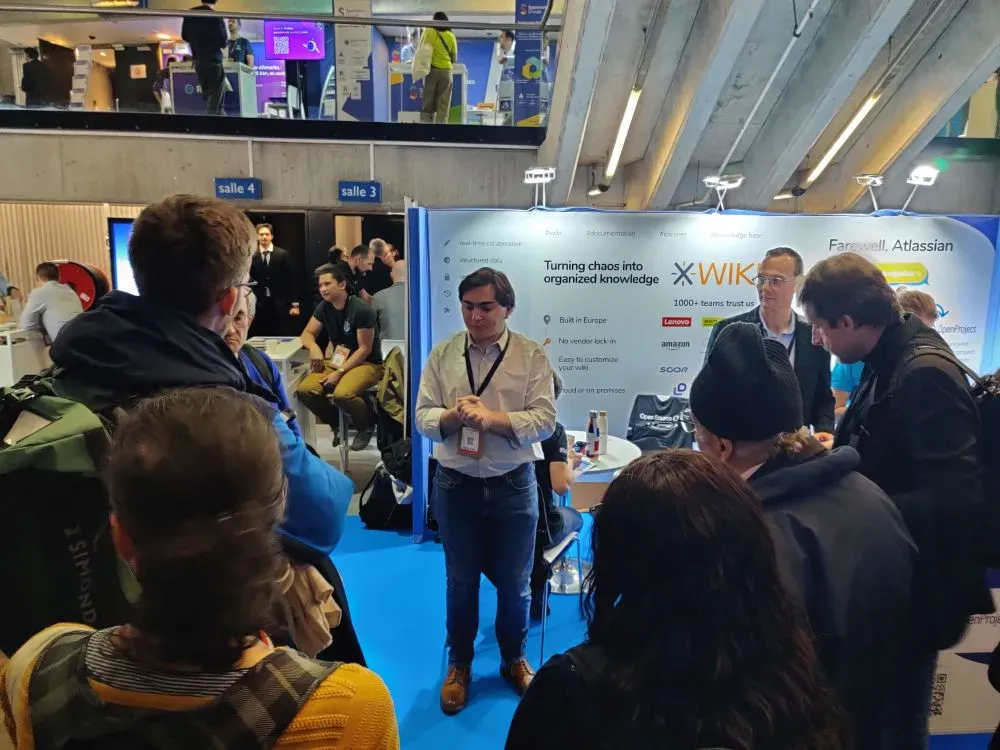
We finished the season in Paris at Open Source Experience with a bigger footprint than usual. Alongside our joint booth with OpenProject, we also had a presence at the Orange stand, which gave us room for both product discussions and ecosystem-level conversations.
The program gave us the chance to go deeper than booth conversations. In our joint workshop, "Sovereign alternatives to Atlassian Jira and Confluence," we showed how XWiki and OpenProject work together in day-to-day use. We focused on linking knowledge and projects, covering the core Confluence and Jira workflows, and what matters in real deployments, from integration to governance.
The rest of the program highlighted the range of work happening in our ecosystem. Manuel Leduc shared feedback from building Cristal as a modular JavaScript application. MaiaSpace presented their own perspective on using XWiki and AI to strengthen knowledge management. Later, Ludovic Dubost and Fabrice Mouhartem covered CryptPad’s security-by-design approach with end-to-end encryption, keeping the focus on what this enables in real collaboration.
Day 2 shifted the spotlight to concrete experience and partnerships. Clément Aubin spoke about Orange and its partners in the open-source ecosystem. He then joined Anca Luca for a session on migrating the European Parliament from Confluence to XWiki, sharing lessons learned from a migration where scale and governance are not optional.
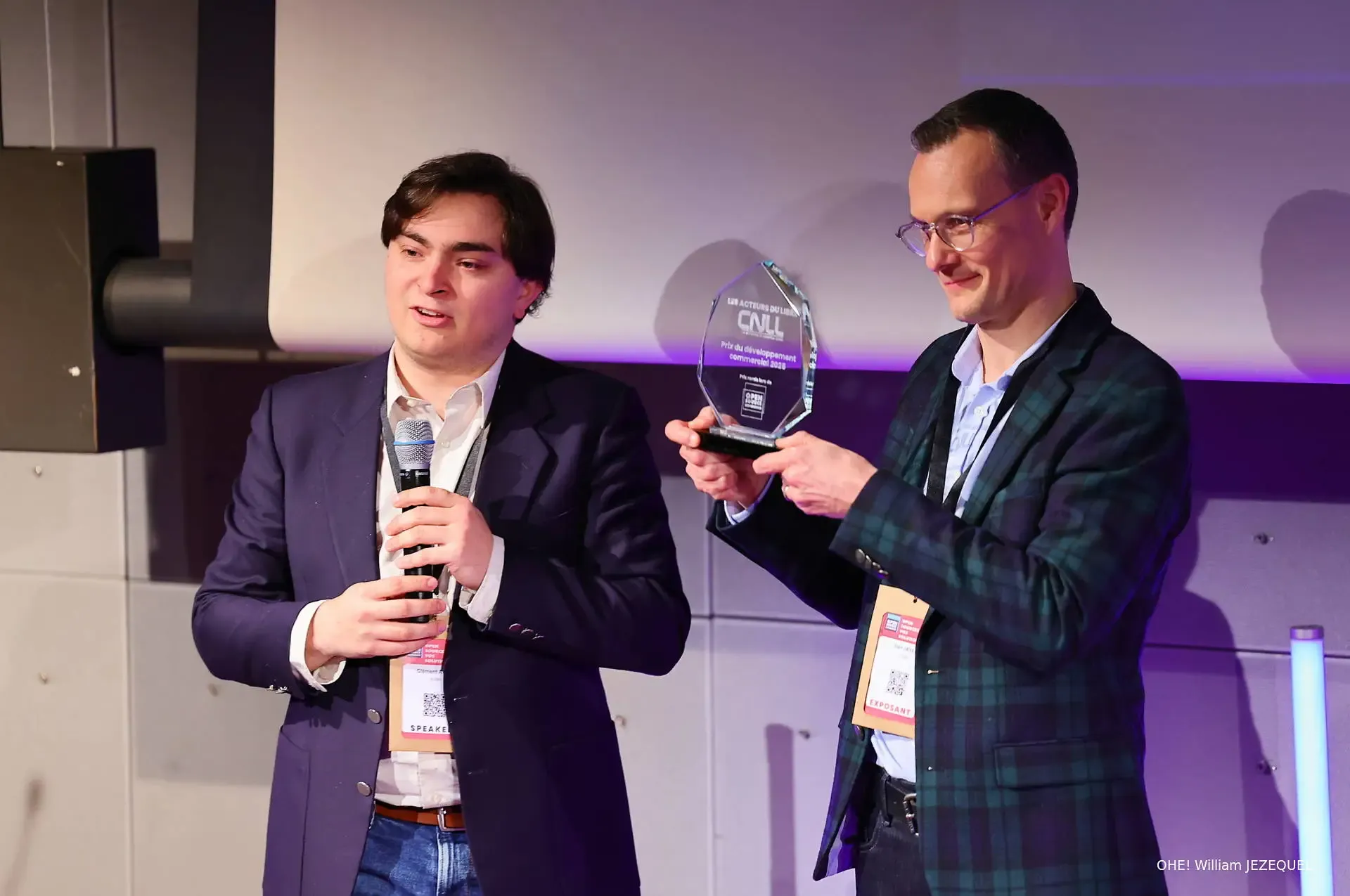
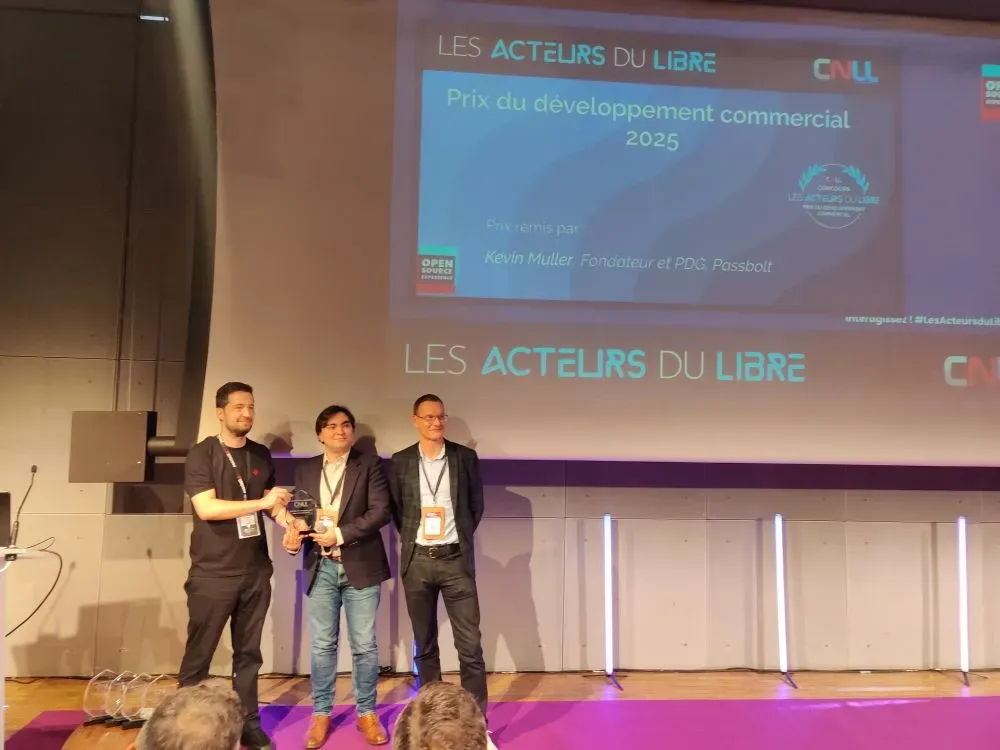
OSXP was also a moment of recognition. During the event, XWiki received the CNLL award for commercial development, acknowledging the work done to grow open-source solutions in professional and institutional contexts.
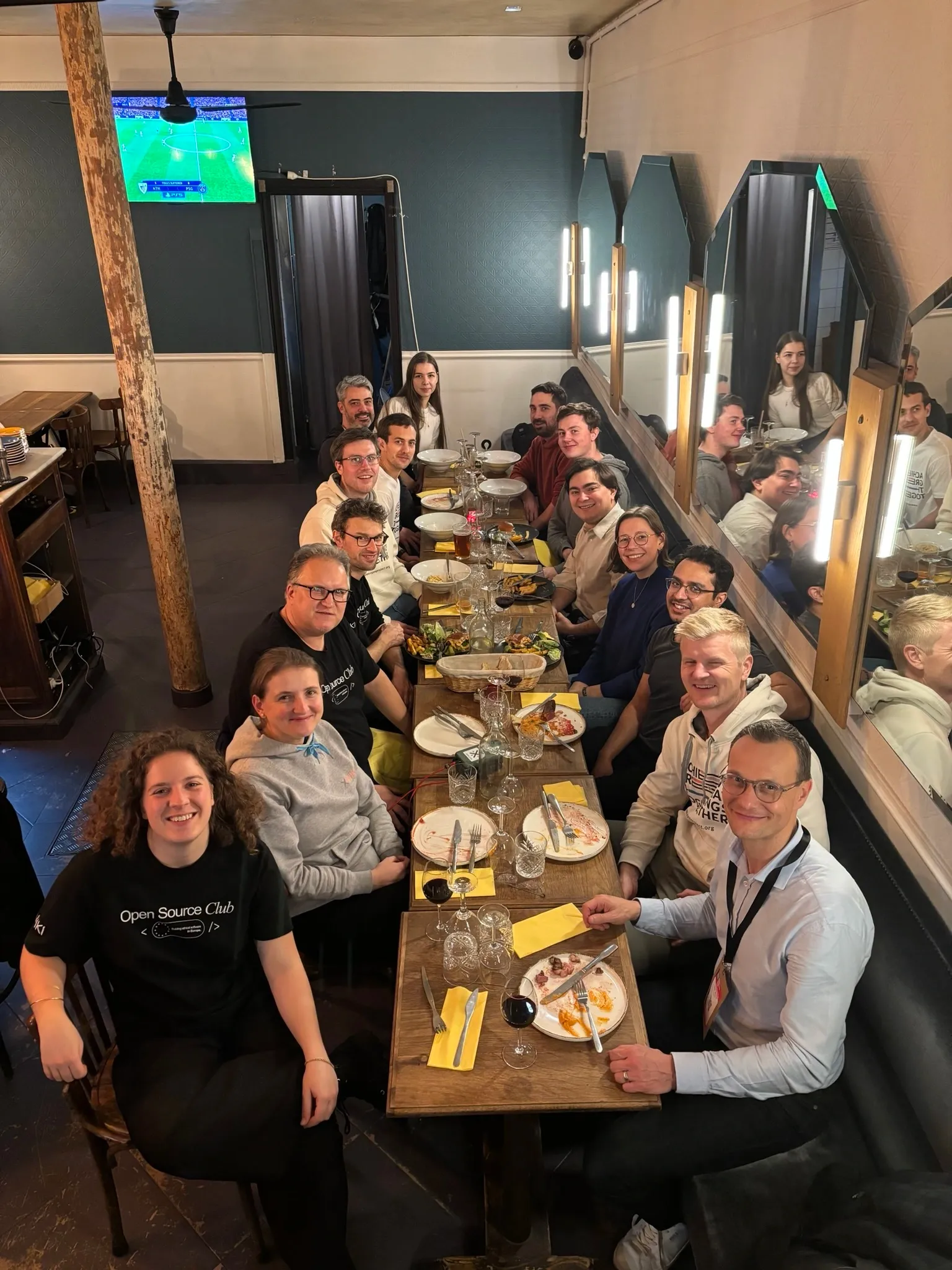
Open Source Experience felt like a strong conclusion to the year. Not because it wrapped things up neatly, but because it brought together many of the threads we had been discussing all autumn: sovereignty, collaboration, integration, and the reality of running open source at scale.
*
Beyond the events
Looking back, what stood out most this autumn wasn’t a single talk or booth moment, but the consistency of the conversations. Across Europe, the questions have become more precise and more operational. Open source is no longer approached as an experiment. It’s being evaluated as long-term infrastructure.
The conversation continues in January. We’ll be at the Univention Summit, together with OpenProject, which makes it a good moment for organizations looking for a complete open-source alternative to the Atlassian stack to come and talk with us.
We’ll also be back at FOSDEM, where we’ll once again host the Content and Collaboration devroom. Alongside the conference, we’re preparing a joint meetup with Nextcloud, OpenProject, and Passbolt. More details will follow soon.
The questions are getting sharper. The ecosystem is getting stronger. We’re looking forward to continuing the conversation in the new year.